Brushing and Flossing
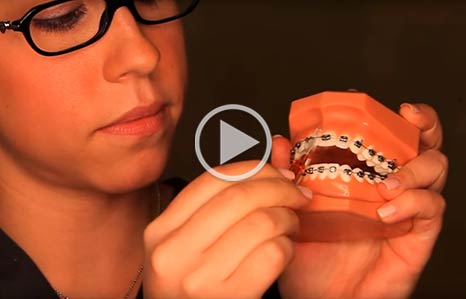
It’s more important than ever to brush and floss regularly when you have braces, so the teeth and gums are healthy during orthodontic treatment. Patients who do not keep their teeth clean may require more frequent visits to their dentist for a professional cleaning and are at higher risk of cavities and gum issues. Adults in particular who have a history of gum disease should be followed more closely by their dentist or a periodontist during orthodontic treatment as well. Watch the two videos below on the proper care of braces during orthodontic treatment.
Eating with Braces
As your teeth will be sore the first day or so upon starting braces, stick to softer foods such as pasta, mashed potatoes, ice cream etc. that are easier to chew. Avoid tough meats, hard breads, and raw vegetables. Before long, you’ll be able to bite normally again, but you’ll need to protect your orthodontic appliances when you eat as long as you’re wearing braces. Hard foods should be avoided as they can knock off a brace, requiring an extra emergency appointment to repair. Repeated breaks can quickly delay treatment progress. Likewise, sticky foods can easily become stuck in the braces and wires, making it difficult to clean and increasing the risk of cavities during treatment.
Foods to Avoid
- Hard foods: bagels, hard rolls, nuts, hard candy
- Crunchy foods: popcorn, ice
- Sticky foods: caramels, gum, taffy
- Any foods you have to bite into: corn on the cob, apples, carrots
Chewing on hard things (for example, pens, pencils or fingernails) can damage the braces. Damaged braces will cause treatment to take longer.
General Soreness
When you get your braces on, you may feel general soreness and the teeth may be tender to biting pressures for 3 to 5 days. Feel free to take Tylenol, Advil, or whatever you would normally take for a headache or discomfort, following the directions on the packaging for dosing. The lips, cheeks and tongue may also become irritated for one to two weeks as they toughen and become accustomed to the braces. We will supply wax to put on the braces in irritated areas to lessen the discomfort.
Loosening of Teeth
This is to be expected throughout treatment. Don’t worry it’s normal! Teeth must loosen first so they can move. The teeth will firm up in their new, corrected positions after treatment is completed.
Loose Wire or Band
Don’t be alarmed if a wire or band comes loose. If a wire sticks out and is irritating, use a blunt instrument (eraser end of a pencil) and carefully push the irritating wire back under the archwire to get it out of the way. If irritation to the lips or mouth continues, place wax on the wire to reduce the annoyance. Call our office as soon as possible for an appointment to check and repair the problem.
Rubber Band Wear
To successfully complete orthodontic treatment, the patient must work together with the orthodontist. The teeth and jaws can only move toward their proper positions if the patient consistently wears rubber bands or other appliances as prescribed. Lack of cooperation and damaged appliances can quickly result in treatment delays and increased overall treatment length.
Athletics
If you play sports, it’s important you let us know. A protective mouthguard specific for braces is provided for playing contact sports at no extra cost.